
The Bengali New Year, known as Pohela Boishakh, is one of the most vibrant, inclusive, and universal festivals in Bengali life. It is more than just the first day of the year – it is a celebration of renewal, joy, and cultural identity. The day brings an indescribable festive spirit, a sense of freshness, and a gentle, uplifting energy that fills the air. Traditional attire – sarees adorned with alpana motifs, panjabis, and the striking palette of red, white, and green – transforms the day into a living canvas of culture and color.

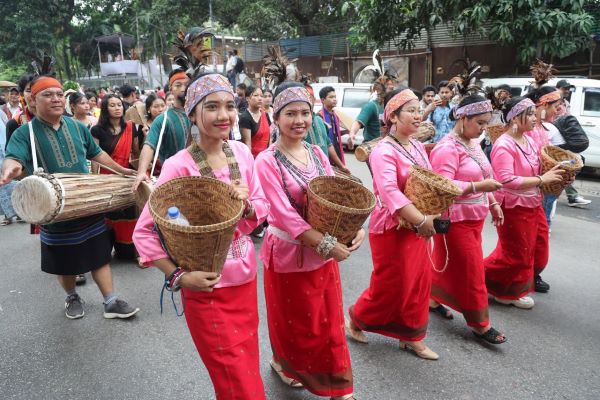
Over the time, this tradition has evolved while retaining its essence. Today, the celebration blends heritage with modern expression – from live satellite broadcasts to grand gatherings under the iconic banyan tree at Ramna Park in Dhaka. Across cities, towns, and rural villages alike, the New Year is welcomed with fairs, music, and community festivities. The aroma of panta ilish (fermented rice with hilsa fish), the rhythm of drums, the melodies of flutes, and the vibrant Mangal Shobhajatra procession together create an unforgettable cultural spectacle.
A Glimpse into History
The origins of the Bengali calendar date back centuries, rooted in a solar system that marked the twelve months of the year. However, during the Mughal era, agricultural taxes were collected based on the Islamic Hijri calendar, which follows a lunar cycle and did not align with the harvest seasons. To address this mismatch, Emperor Akbar introduced a reformed calendar.
Under his directive, astronomer Amir Fathullah Shirazi combined the solar and Hijri systems to create a more practical calendar. Although officially introduced in 1584, it was backdated to 1556 – the year of Akbar’s ascension to the throne. Initially called the Fasli San (???? ??), it later became known as the Bangla San (????? ??) or Bengali calendar.

The names of the Bengali months are derived from constellations – Boishakh from Vishakha, Jyoishtho from Jyeshtha, Asharh from Ashadha, and so on. Historically, the agricultural cycle influenced the calendar structure, with Agrahayan once considered the first month due to the harvest season. Later, Emperor Shah Jahan introduced the seven-day week system, aligning it with the globally recognized structure.

The Tradition of Hal Khata
A significant social custom associated with the Bengali New Year is Hal Khata (??? ????). Where businesses start the year fresh with their customers – and you’ll see something important: relationships come first here. Even today, shopkeepers open new accounting books, settle previous dues, and invite customers to celebrate with sweets – symbolizing a fresh financial beginning. In many markets across Bangladesh, this tradition continues to thrive, reflecting trust, relationships, and continuity in commerce. Traditionally, farmers would settle their land taxes at the end of the previous year, and on the first day of the New Year, landlords would host them with sweets and hospitality. Over time, this practice evolved into a business tradition.
Hal Khata (??? ????), where businesses start the year fresh with their customers – and you’ll see something important: relationships come first here.

Culture, Heritage, and Identity
Art, literature, and culture are the foundation of human civilization, and Bengali identity has evolved through knowledge, creativity, and shared experiences rather than mere physical strength. Though many historical artifacts may have faded over time, the cultural richness remains vast and profound.
Yet, it is also true that only a fraction of this heritage has been preserved. As a result, modern society has lost some of its former brilliance. Festivals like the Bengali New Year serve as a reminder to reconnect with those roots – to rediscover and rebuild what has been lost.


A Festival of Renewal
Pohela Boishakh represents a powerful symbol of renewal. Bangladesh, with its six distinct seasons and natural beauty, offers a perfect backdrop for such a celebration. The land – rich with rivers, crops, flowers, and vibrant life – inspires people to celebrate with enthusiasm. The popular saying, “Thirteen festivals in twelve months,” reflects the deeply festive nature of Bengali culture.
As nature dresses itself anew, people also embrace new beginnings – wearing fresh clothes, carrying new dreams, and stepping into a new year with optimism. The transition from the last day of the old year (Chaitra Sankranti) to the first day of the new year marks both an ending and a beginning.
At this turning point, people let go of past sorrows and embrace hope. Rural fairs showcase the creativity of everyday life – clay dolls, palm-leaf fans, bamboo flutes, and jute crafts – simple yet deeply artistic expressions of culture. Even in the face of hardship, people celebrate life with resilience and joy.

More Than Just a Day
The Bengali New Year is not merely a date on the calendar – it is a symbol of hope, possibility, and transformation. It reminds us that life is a continuous journey of renewal. The beauty of life lies in letting go of the past and welcoming the future with an open heart.

Above all, it carries a simple yet profound prayer: that our hearts become purer, brighter, and more compassionate. That we rediscover the true spirit of togetherness – where people stand beside one another, united in harmony, sharing a collective rhythm of humanity.
Image Courtesy: Prothom Alo


